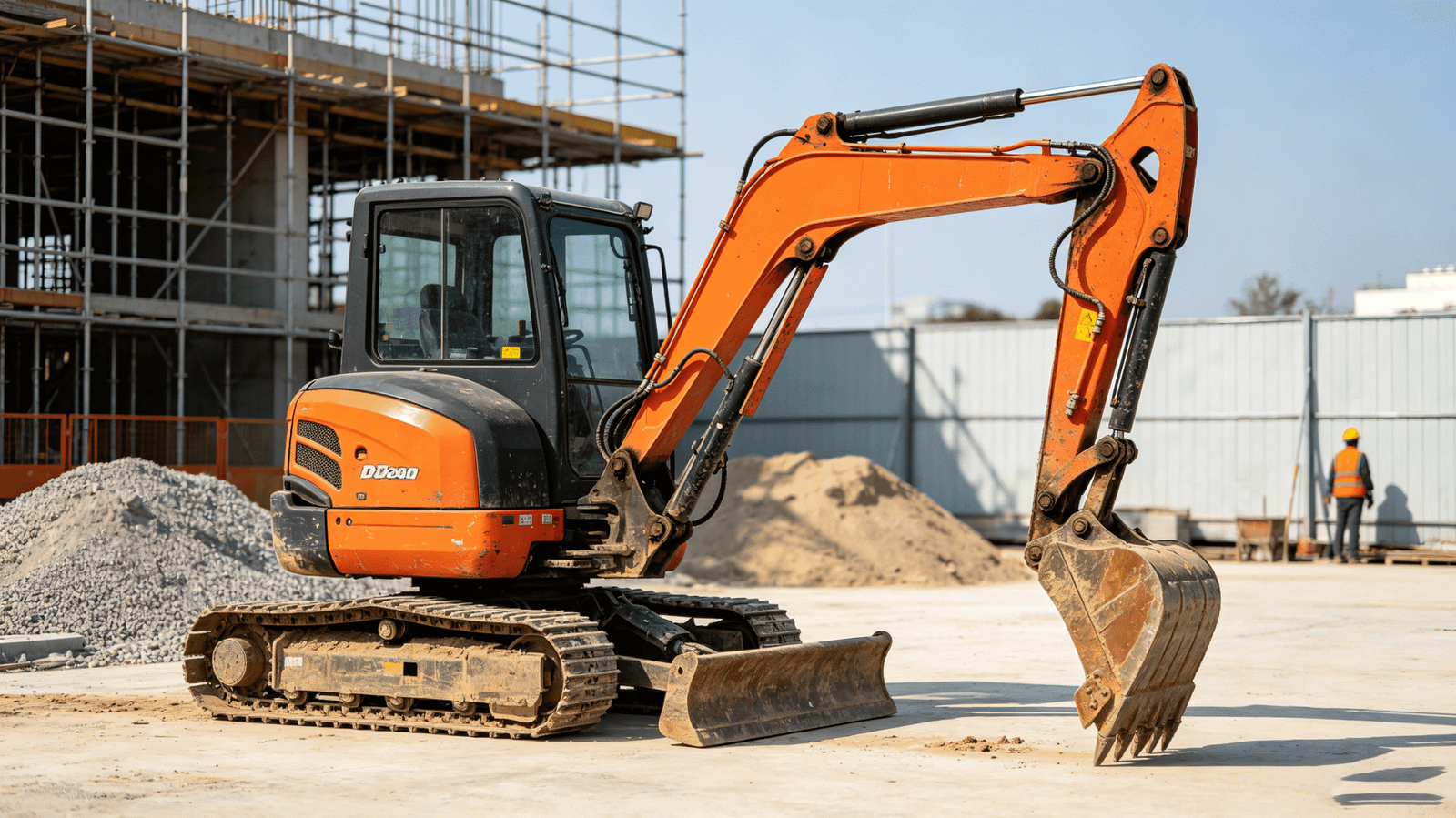
With the growing demand for compact equipment in construction, agriculture, landscaping, and roadwork, used mini excavators have become an important choice for many contractors and individual buyers. Their lower purchase cost, flexible operation, and wide range of applications make them suitable for different working environments.
However, choosing a used mini excavator should not be based only on price or brand. The right machine should match your jobsite conditions, workload, machine condition, and long-term operating costs.
1. Choose the Right Size for Your Jobsite
The first factor to consider is the available working space.
For narrow areas such as residential projects, farms, orchards, and landscaping jobs, a compact used mini excavator with a small tail swing radius can be more practical.
Pay attention to:
- Overall machine width
- Overall height
- Tail swing radius
- Maximum working radius
- Transport dimensions
Choosing the right size makes operation easier and also simplifies transportation to and from the jobsite.
2. Choose the Operating Weight Based on the Job
Different operating weights are suitable for different applications.
Smaller machines are commonly used for trenching, landscaping, farming, and residential projects, while larger compact excavators can provide greater digging force and higher productivity.
Before purchasing, clearly identify the main jobs the machine will perform instead of simply choosing the largest available model.
3. Check Digging Depth and Working Range
If the machine will be used for trenching or foundation work, pay close attention to:
- Maximum digging depth
- Maximum digging radius
- Maximum dumping height
- Boom and arm working range
- Bucket capacity
The machine’s operating specifications should match the actual requirements of your project.
4. Carefully Inspect the Engine and Hydraulic System
When purchasing used equipment, actual machine condition is more important than appearance.
Check whether the engine starts normally and runs smoothly. The hydraulic pump, cylinders, hydraulic lines, and swing system should also be inspected for abnormal leakage or unstable operation.
The engine and hydraulic system have a direct impact on machine productivity and future maintenance costs.
5. Do Not Look Only at Operating Hours
Operating hours are an important reference when evaluating a used mini excavator, but they should not be the only factor.
A machine with higher operating hours but regular maintenance may be in better condition than a low-hour machine that has not been properly maintained.
Therefore, buyers should evaluate:
Operating Hours + Maintenance Records + Engine Condition + Hydraulic System + Undercarriage Wear together.
6. Select Attachments According to Your Applications
Different attachments can significantly expand the capabilities of a used mini excavator.
Common attachments include:
- Standard bucket
- Narrow bucket
- Grading bucket
- Hydraulic breaker
- Auger
- Grapple
- Hydraulic clamp
If the machine will be used for multiple applications, make sure the hydraulic system is compatible with the required attachments.
7. Consider Transportation and Total Ownership Costs
For overseas buyers, transportation costs are also an important part of the purchasing decision.
The total cost may include:
Machine Price + Ocean Freight + Port Charges + Fuel + Maintenance + Spare Parts
Buyers should also confirm the machine’s dimensions, operating weight, shipping requirements, and local import regulations before purchasing.
8. Choose the Right Brand and Model
Common brands in the used mini excavator market include Kubota, Yanmar, and CAT.
Different brands and models may vary in engine configuration, hydraulic systems, dimensions, operating performance, and spare-parts availability.
When selecting a brand or model, consider local maintenance resources, spare-parts availability, and your actual working requirements.
9. Used Mini Excavator Buying Checklist
Before purchasing, buyers can use the following checklist:
| Inspection Item | What to Check |
| Working Environment | Space and ground conditions |
| Machine Dimensions | Width, height, tail swing |
| Operating Weight | Transportation and jobsite requirements |
| Digging Performance | Depth, radius, dumping height |
| Engine | Starting, running, exhaust |
| Hydraulic System | Pump, cylinders, hydraulic lines |
| Undercarriage | Tracks, sprockets, rollers |
| Operating Hours | Hours and usage history |
| Attachments | Buckets, breakers, etc. |
| Transportation | Freight and import requirement |
Conclusion
Choosing the right used mini excavator is not simply about finding the lowest price. The most important factor is whether the machine matches your actual jobsite requirements.
Before buying, consider the working environment, machine dimensions, operating weight, digging performance, operating hours, engine, hydraulic system, undercarriage, attachments, transportation, and maintenance costs. A comprehensive inspection can help buyers select a used mini excavator that is suitable for their specific project.
Whether you are a farmer, contractor, or equipment dealer,we can provide reliable used mini excavator solutions for your business.Contact us today to learn about our latest inventory, competitive pricing,and expert recommendations.