After years of operation, a used mini excavator may accumulate dust, sediment, moisture, and other contaminants inside the fuel tank. If the tank is not properly maintained, these contaminants can enter the fuel system and affect engine performance, fuel filters, injectors, and other components.
Therefore, regular inspection and proper fuel tank cleaning are important parts of used mini excavator maintenance. For used Kubota, Yanmar, CAT, and other compact excavators, special attention should be paid to fuel system cleanliness, especially when the machine has been stored for a long time or operated with poor-quality fuel.
1. Why Should a Used Mini Excavator Fuel Tank Be Cleaned?
The fuel tank is more than just a storage container. Its internal cleanliness can directly affect the fuel supply system.
After long-term use, the bottom of a fuel tank may contain:
- Dust and dirt
- Foreign particles
- Fuel sediment
- Water
- Rust particles
- Contaminants caused by long-term storage
If these contaminants enter the engine fuel system, they may cause clogged fuel filters, unstable fuel delivery, reduced engine performance, or difficult starting.
2. Check the Fuel Tank Before Cleaning
Before cleaning, inspect the fuel tank and fuel system carefully.
Pay attention to:
- Fuel condition
Check whether the fuel is cloudy, discolored, or contaminated. - Sediment at the bottom
A large amount of sediment may indicate that the tank needs thorough cleaning. - Water contamination
Water can settle at the bottom of the tank and should be removed. - Rust and corrosion
Check for visible rust or corrosion inside the tank.
3. Safety Comes First
Fuel is flammable, so safety must be the first priority.
When cleaning a fuel tank:
- Work in a well-ventilated area
- Stop the engine and allow the machine to cool
- Keep away from cigarettes and open flames
- Use suitable tools for fuel-system maintenance
- Wear appropriate protective gloves and eye protection
- Collect and store drained fuel properly
- Never dispose of waste fuel into soil or drainage systems
If the tank is heavily contaminated, damaged, or requires removal, professional service is recommended.
4. Remove Contaminated Fuel Properly
If the fuel is visibly contaminated, it should not continue to be used in the engine.
Drain and dispose of contaminated fuel according to local environmental and waste-management requirements.
For used mini excavators that have been stored for a long time, check carefully for water, sediment, and foreign particles before adding clean fuel that meets the machine manufacturer’s requirements.
5. Clean the Tank and Related Components
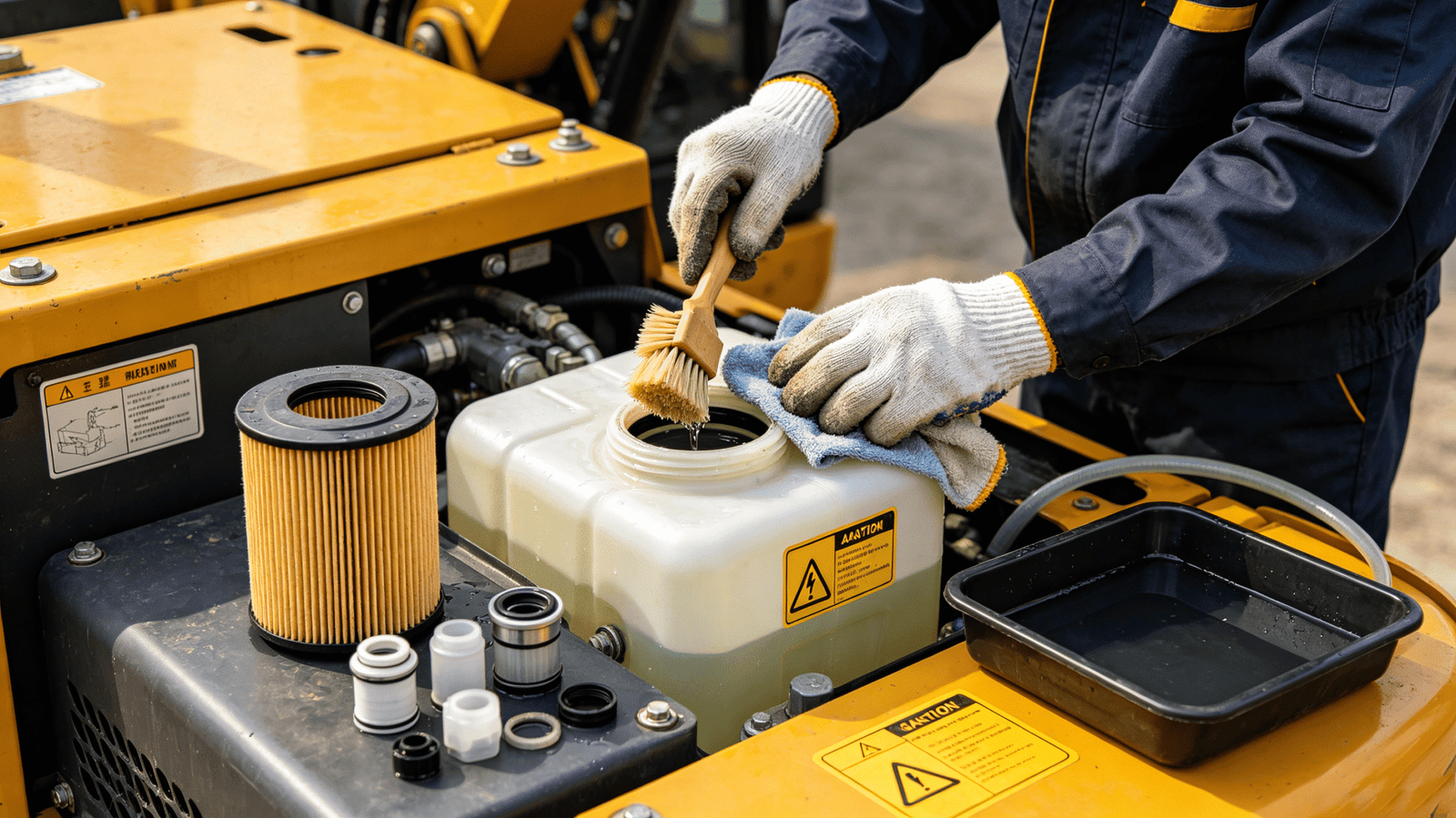
Fuel tank cleaning should not focus only on removing sediment from the bottom. The entire fuel supply system should also be inspected.
Important components include:
- Fuel tank interior
- Fuel filter
- Fuel lines
- Fuel connections
- Fuel cap and seals
- Fuel sediment bowl, if equipped
Avoid using cleaning products that may damage the tank, seals, hoses, or other fuel-system components.
After cleaning, make sure the tank is free of moisture and cleaning residue before adding suitable fuel.
6. Replace the Fuel Filter When Necessary
If significant contamination is found inside the fuel tank, the fuel filter should also be inspected.
Even after the tank has been cleaned, a heavily contaminated or clogged filter can continue to affect fuel delivery.
For used mini excavators, filter replacement should be based on the manufacturer’s maintenance schedule, filter condition, and the actual level of contamination.
7. Do Not Ignore the Fuel Tank Cap
The fuel cap is a small component, but its sealing performance is important.
A damaged or poorly sealed fuel cap can allow dust and moisture to enter the tank.
During fuel system maintenance, inspect the fuel cap, sealing components, and venting system to ensure they are functioning properly.
8. Keep the Fuel System Clean After Maintenance
Cleaning the fuel tank is only one part of fuel-system maintenance.
After cleaning:
- Use fuel that meets the machine requirements
- Keep the fuel cap and filling area clean
- Avoid contaminated fuel
- Inspect filters according to the maintenance schedule
- Follow proper fuel-system procedures during long-term storage
- Regularly inspect the tank and fuel lines
Good fuel-management practices can reduce the risk of contamination.
Conclusion
Fuel tank cleaning is an important part of maintaining a used mini excavator. Removing sediment, contaminants, and water while checking the fuel filter, fuel lines, and tank seals can help maintain stable fuel delivery.
For used equipment, good maintenance records, proper cleaning procedures, and regular inspections can help maintain reliable operation and reduce unnecessary repair risks.
Would you like to receive more machine photos, working videos, technical specifications,and the latest quotation? Contact our sales team today forone-on-one assistance and let us help you find the right machine for your project.