
Rubber tracks are essential components of a used mini excavator. They directly affect traction, travel stability, and working efficiency. After long-term operation on gravel, concrete, soil, and other challenging surfaces, rubber tracks can gradually develop wear, cracks, and aging.
If these problems are not identified in time, they may affect machine performance and increase maintenance costs.
So, when should you replace the rubber tracks on a used mini excavator? Here are several important signs to look for.
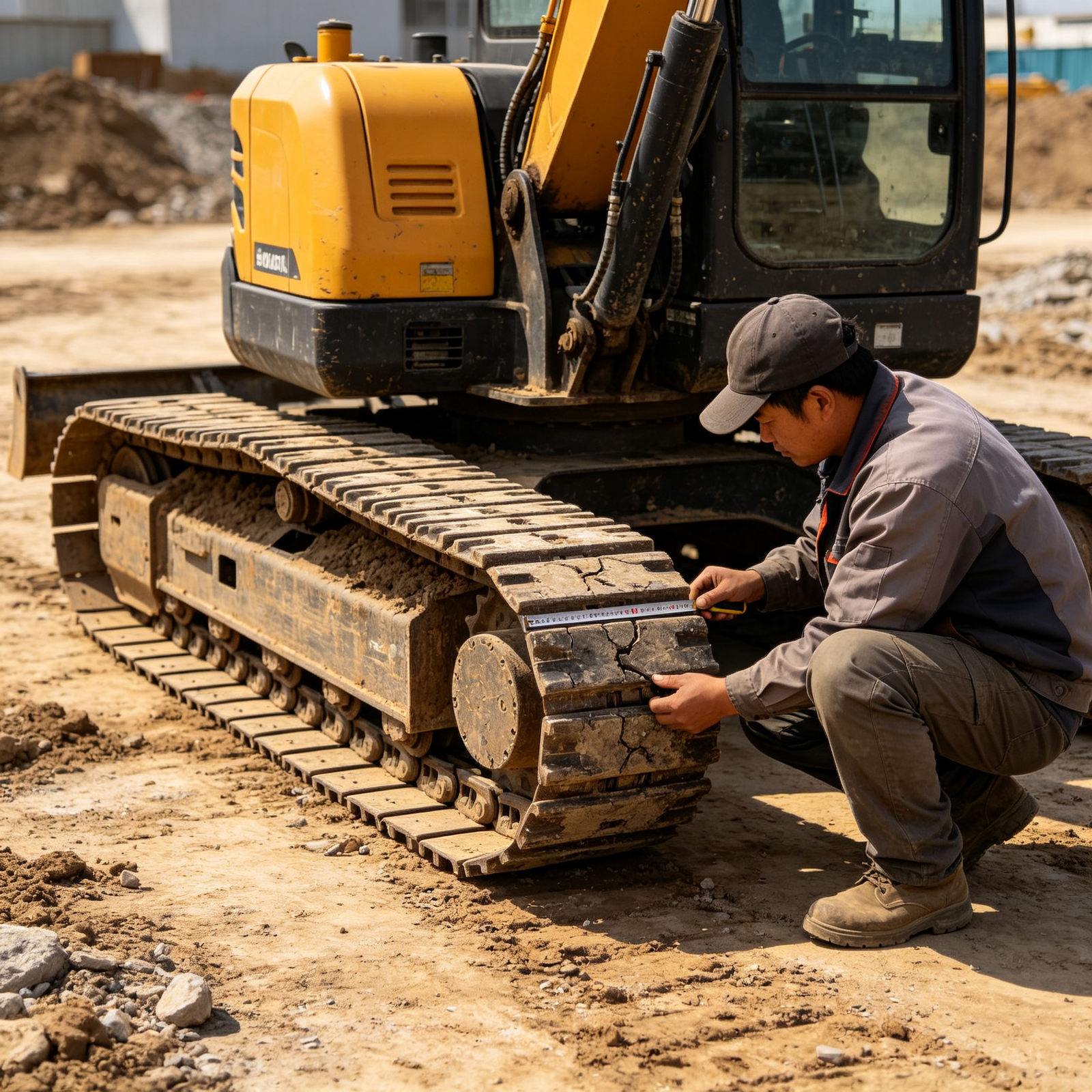
1. Visible Cracks on the Rubber Tracks
Deep cracks on the surface or sides of rubber tracks may indicate aging or structural damage.
Small surface cracks do not always mean immediate replacement is necessary. However, if cracks become deeper or expose the internal steel cords or reinforcement structure, the tracks should be inspected carefully and replacement should be considered.
2. Severe Track Tread Wear
Rubber tracks gradually wear down through continuous contact with the ground.
When the tread patterns become noticeably shallow or the rubber lugs are badly worn, the excavator may lose traction, especially on wet, soft, or uneven surfaces.
If track wear begins to affect normal operation and machine stability, replacement may be necessary.
3. Broken Rubber or Missing Track Sections
Rubber peeling, tearing, or exposed steel cords are signs of serious track damage.
Large damaged areas along the track edges can increase the risk of track failure or derailment. In this situation, avoid heavy-duty operation and arrange a full track inspection. Replace the tracks if their structural integrity is compromised.
4. Frequent Track Derailment or Abnormal Track Tension
If a used mini excavator frequently throws a track during normal operation, check the track condition, tension, and undercarriage components, including the sprockets, idlers, and rollers.
Keep in mind that track derailment does not always mean the rubber tracks need replacement. Incorrect track tension or worn undercarriage components may also be responsible. Identify the cause before making a replacement decision.
5. Aging, Deformation, or Loss of Flexibility
Long-term exposure to direct sunlight, high temperatures, and oil contamination can accelerate rubber deterioration.
If the tracks become hard, deformed, swollen, or noticeably less flexible, they should be professionally inspected, even if the tread patterns are not completely worn out.
6. How to Extend the Service Life of Rubber Tracks
Proper operation and regular maintenance can help reduce rubber track wear:
- Avoid sharp rocks and rough surfaces:Reduce the risk of cuts and punctures.
- Maintain proper track tension:Tracks that are too loose may derail, while overly tight tracks increase stress on the tracks and undercarriage.
- Avoid excessive counter-rotation:Use smooth turning movements to reduce friction and wear.
- Clean the tracks regularly:Remove stones, mud, and debris trapped around the tracks and undercarriage.
- Keep rubber tracks away from oil and chemicals:Fuel, lubricants, and certain chemicals can accelerate rubber deterioration.
- Inspect the undercarriage regularly:Check sprockets, idlers, rollers, and tensioning components to prevent abnormal wear.
7. How to Inspect Rubber Tracks When Buying a Used Mini Excavator
When purchasing a used mini excavator, do not judge the tracks only by their tread depth. Check the following points:
- Look for cracks, tears, and missing rubber on both sides.
- Check whether the tread wear is even or concentrated on one side.
- Inspect for exposed steel cords or internal structural damage.
- Check whether the track tension is appropriate.
- Inspect the sprockets, idlers, and rollers for abnormal wear.
- Test the excavator for unusual noises, vibration, or track derailment during travel.
A practical travel test before purchase can help identify potential problems. Buyers should also consider future maintenance and replacement costs when evaluating the machine.
Conclusion
The condition of rubber tracks has a direct impact on the safety and working efficiency of a used mini excavator. Deep cracks, severe tread wear, exposed steel cords, structural damage, and frequent derailment are important warning signs.
Regular inspections, proper operation, and timely maintenance can extend rubber track service life and help reduce the long-term operating costs of a used mini excavator.