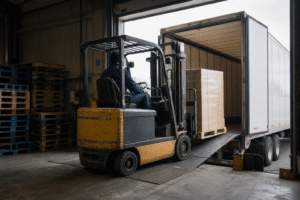
With the growth of warehousing, logistics, manufacturing, construction, and material handling industries, forklifts have become important equipment for improving handling efficiency.
Among different forklift types, used diesel forklifts are widely considered for their strong load capacity, suitability for outdoor applications, and relatively lower purchase cost.
But are used diesel forklifts worth buying? What are their advantages and disadvantages, and what should buyers check before purchasing?

1. What Is a Used Diesel Forklift?
A used diesel forklift is a diesel-powered forklift that has been operated previously and is now available for resale.
It uses a diesel engine as its primary power source and works together with the forks, mast, and hydraulic system to lift, move, load, and stack materials.
Compared with electric forklifts, diesel forklifts are generally more suitable for outdoor applications, heavy loads, and extended operating periods.
2. Advantages of Used Diesel Forklifts
Strong Load Capacity
Diesel forklifts are commonly designed for handling heavy materials and can be used in factories, warehouses, construction sites, logistics centers, and other working environments.
Suitable for Outdoor Applications
Diesel engines can provide consistent power for outdoor operations, making diesel forklifts suitable for construction sites, loading areas, and outdoor material-handling applications.
Lower Initial Purchase Cost
Compared with purchasing a new diesel forklift, a used machine can reduce the initial investment. This makes used diesel forklifts worth considering for small and medium-sized businesses and equipment rental companies.
Maintenance and Spare Parts
Diesel forklifts are widely used in many markets. Common brands and models may have established maintenance services and spare-parts supply channels.
3. Disadvantages of Used Diesel Forklifts
Although used diesel forklifts have several advantages, previously operated equipment may also have problems caused by wear and aging.
Common issues to check include:
- Engine wear
- Hydraulic system leakage
- Unstable mast movement
- Tire wear
- Brake system deterioration
- Electrical problems
- Diesel engine emissions and noise
Therefore, buyers should evaluate the actual condition of the forklift rather than focusing only on the purchase price.
4. How to Inspect a Used Diesel Forklift
Before purchasing, buyers should inspect several key components.Check whether the engine starts properly and idles smoothly. Look for unusual noises, excessive exhaust smoke, or obvious oil leaks during operation.
Hydraulic System
Inspect the hydraulic pump, cylinders, hoses, and mast lifting system. Make sure lifting, lowering, and tilting movements are smooth.
Mast and Forks
The forks are critical load-bearing components and should be inspected carefully for deformation, cracks, or excessive wear.
The mast structure should also be checked for stability and abnormal movement.
Tires
Inspect the tires for wear, cracks, and other damage.
Tire condition is especially important if the forklift has been frequently used outdoors or on uneven surfaces.
Braking and Steering Systems
Test the braking and steering systems to ensure that the forklift can stop and change direction properly.
5. Where Can Used Diesel Forklifts Be Used?
Used diesel forklifts can be used in many material-handling applications, including:
- Factories
- Warehouses
- Logistics centers
- Construction sites
- Ports and freight areas
- Timber processing
- Steel handling
- Farms and large agricultural operations
They are particularly useful in environments that require heavy-duty material handling and outdoor operation.
6. What Should You Consider Before Buying?
In addition to machine condition, buyers should consider the forklift’s rated load capacity, lifting height, engine type, overall dimensions, and intended working environment.
For international buyers, it is also important to consider:
- Machine weight
- Overall dimensions
- Shipping costs
- Spare-parts availability
- Local maintenance services
- Import requirements
If the forklift will mainly be used inside a warehouse, buyers should also consider whether diesel exhaust emissions and engine noise are suitable for the working environment.
Conclusion
Overall, a used diesel forklift can be a practical and cost-effective material-handling solution. Its strong load capacity, suitability for outdoor work, and relatively lower purchase cost make it attractive for many businesses.
However, the value of a used forklift depends heavily on its actual condition. Buyers should carefully inspect the engine, hydraulic system, mast, forks, tires, braking system, and steering system before making a purchase.
For businesses with limited budgets or those requiring heavy-duty material handling and outdoor operation, a professionally inspected and properly maintained used diesel forklift can be an economical choice.