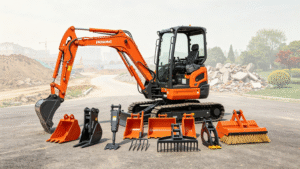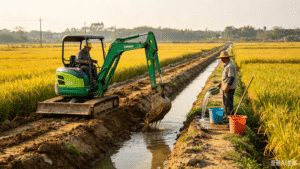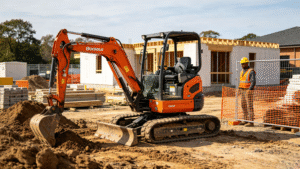
For small construction companies, a used mini excavator can provide a practical balance between productivity and investment cost. Compared with purchasing new equipment, a well-maintained used mini excavator with reasonable operating hours and clear maintenance records can reduce the initial investment while handling residential construction, road repair, landscaping, trenching, grading, and other jobs.
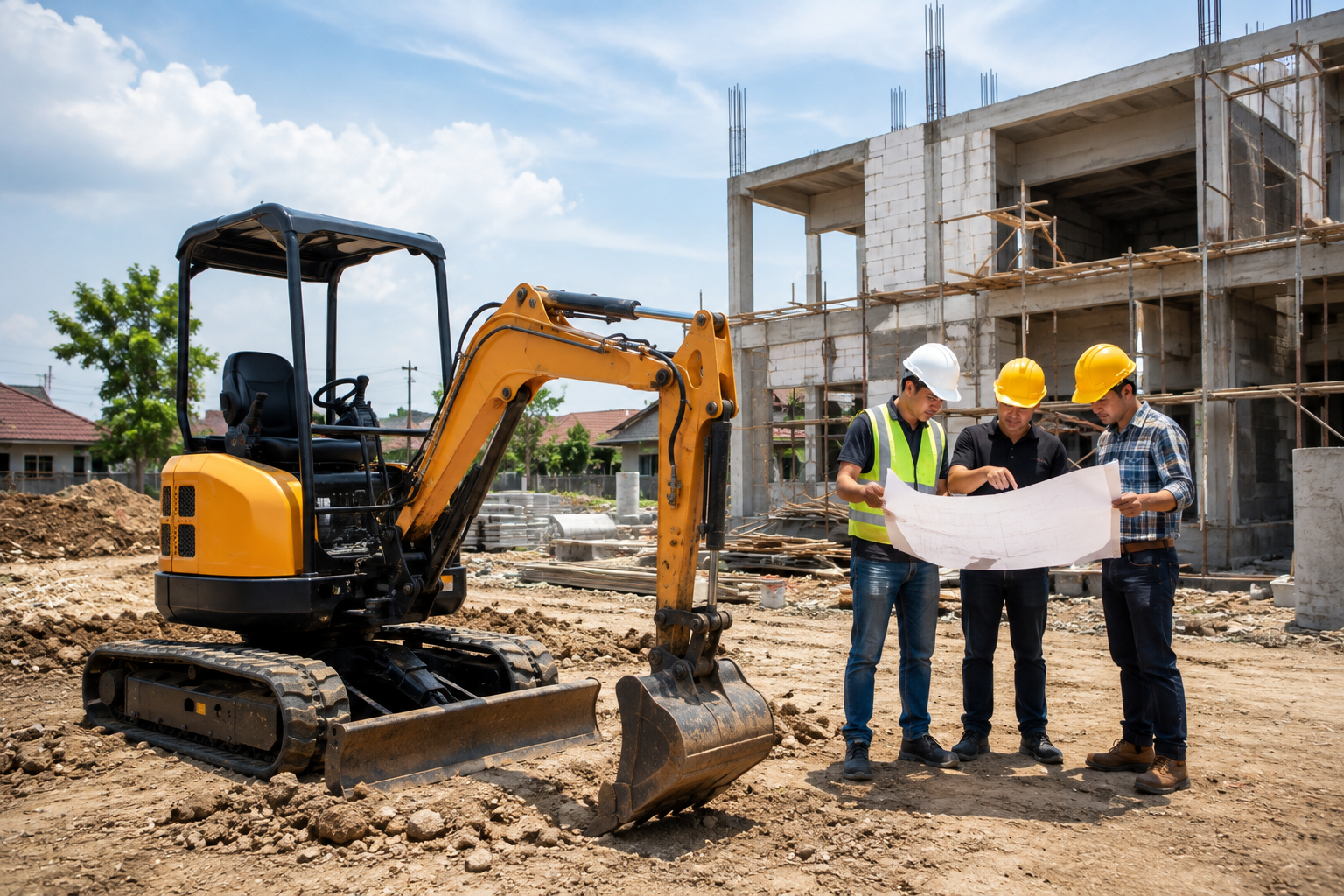
1.Choose the Right Operating Weight
The first step is choosing the right operating weight according to the company’s typical projects rather than simply selecting the largest machine.
- 1–2 tons:Landscaping, residential work, narrow spaces, and light excavation
- 2–3 tons:Utility trenching, farming, residential construction, and general construction
- 3–5 tons:Roadwork, foundation projects, and heavier earthmoving
The right size provides a good balance between digging capability, transportation, and fuel efficiency.
2. Check Operating Hours
Operating hours are an important reference when buying a used mini excavator, but they should not be considered alone.
Buyers should also inspect:
- Engine performance
- Hydraulic system
- Tracks and undercarriage
- Boom and arm play
- Bucket and pin wear
- Electrical system
- Maintenance records
A higher-hour machine with proper maintenance may offer better value than a lower-hour machine that has been poorly maintained.
3.Inspect the Engine and Hydraulic System
The engine and hydraulic system are two of the most important areas when inspecting a used excavator.
Check whether the engine starts easily and runs smoothly. Pay attention to unusual noise or excessive exhaust smoke.
Test the boom, arm, bucket, swing, and travel functions to ensure smooth operation. Hydraulic hoses, cylinders, and connections should also be checked for visible leaks.
4.Check the Undercarriage
The tracks and undercarriage are high-wear components and can be expensive to replace, so they should be carefully inspected.
Check:
- Track shoe wear
- Drive sprocket
- Rollers
- Idler
- Track tension
- Signs of damage or deformation
Poor undercarriage condition can increase future maintenance costs even if the engine and hydraulic system are in good condition.
5.Consider Attachment Compatibilityifferent types of work, making attachment compatibility important.
Common attachments include:
- Standard bucket
- Grading bucket
- Hydraulic breaker
- Auger
- Grapple
- Hydraulic clamp
Before purchasing, confirm hydraulic compatibility and check how easily attachments can be changed.
6.Compare Fuel Consumption and Maintenance Costs
The purchase price is only one part of the total cost. Small construction companies should also consider fuel, maintenance, wear parts, repairs, and transportation.
A useful comparison is:
Purchase price + fuel consumption + maintenance + wear parts + repairs + transportation
Evaluating total ownership cost is more useful than comparing the purchase price alone.
7.Consider Reliable Used Excavator Brands
In the international used construction equipment market, mini excavators from brands such as Kubota, Yanmar, and CAT are widely considered by overseas buyers.
However, brand reputation should not be the only factor. Buyers should evaluate the specific model, production year, operating hours, maintenance history, and actual machine condition.
8.Inspect the Machine Before Purchase
A complete inspection is recommended before finalizing a purchase. If an overseas buyer cannot inspect the machine in person, the supplier can provide:
- Engine starting video
- Hydraulic operation video
- Travel test video
- Operating-hour display
- Machine identification plate
- Engine photos
- Track and undercarriage photos
- 360-degree machine video
- Maintenance records
These materials can help international buyers reduce the risks of remote purchasing.
9.Choose the Right Supplier
The reliability of the supplier is also important. Buyers should determine whether the supplier can provide accurate machine information, detailed photos, videos, specifications, and export shipping services.
For construction companies, dealers, and rental companies purchasing multiple machines, it is also useful to evaluate supply capacity, spare parts support, and after-sales service.
Conclusion
For small construction companies, buying a used mini excavator should not be based on price alone. Operating weight, hours, engine, hydraulic system, undercarriage, attachment compatibility, maintenance history, and total ownership cost should all be considered.
A well-maintained used mini excavator with the right configuration can help reduce initial investment while providing the performance needed for everyday construction projects.
Would you like to receive more machine photos, working videos, technical specifications,and the latest quotation? Contact our sales team today for one-on-one assistance and let us help you find the right machine for your project.